
Tut world:Home Town builder
Hainan Hengdou Network Technology Co., Ltd.Role Playing
4.6173.00 Reviews
- Version
- 1.0.34
- Installs
- 5.00M
- Age Rating
- Everyone
Screenshots
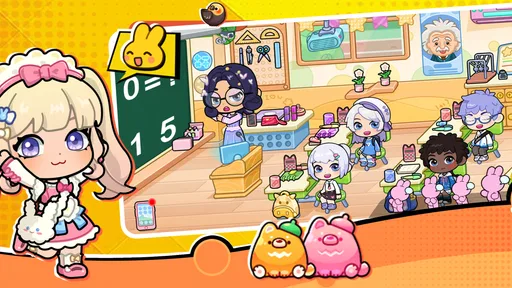
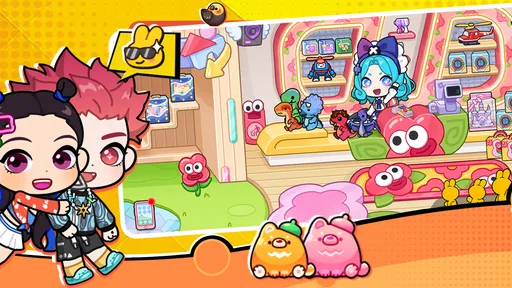
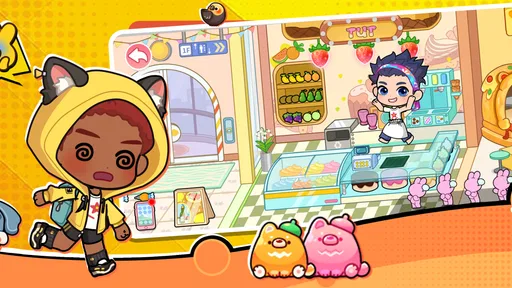
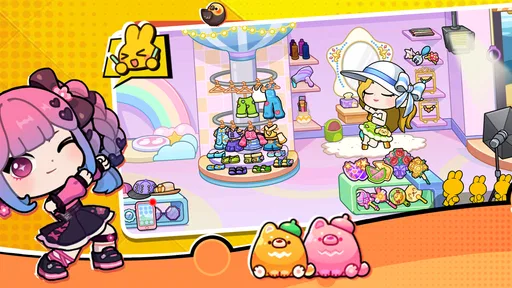

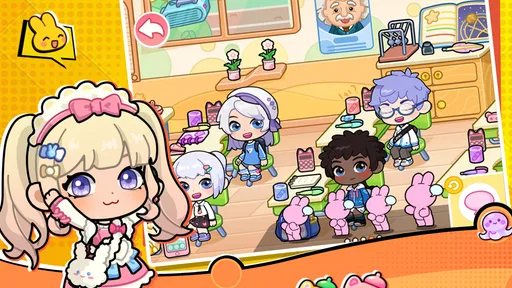
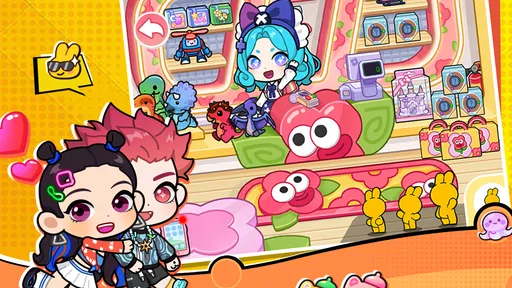
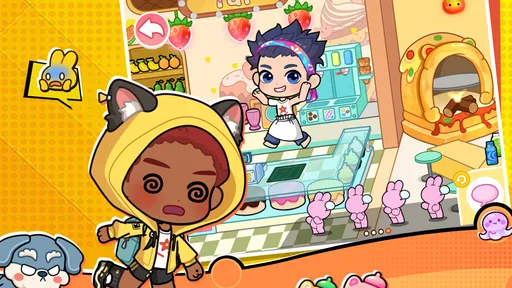
Our Review of Tut world:Home Town builder
 Analysis by Appyee
I went into Tut world:Home Town builder expecting a light role-playing game built around making and dressing up a small animated world, and that is exactly the kind of experience it offers. The appeal is immediate: you create a character, change the look, arrange a playful setting, and keep adjusting details until the scene feels like your own. It is less about winning a difficult battle and more about expressing a mood through cartoon characters, outfits, and everyday locations.
That makes it a comfortable choice for players who enjoy anime-style avatars and makeover games but do not want a complicated ruleset. I can imagine opening it for a few minutes while waiting for an appointment, then returning later when I have a clearer idea for a new character or room. The game is free to start, is rated for Everyone, and runs on Android devices using version 7.0 or later. It comes from Hainan Hengdou Network Technology Co., Ltd., and its current version is 1.0.34.
Building a character is the first action that matters
The first useful step is not trying to understand a long tutorial or memorize a combat system. It is simply deciding what kind of person or scene I want to make. The avatar creator and dress-up focus give the game an approachable starting point: choose a character, experiment with appearance, and see how small visual changes alter the result.
I like this kind of opening because it gives an instant sense of control. A new player does not need to study statistics before making progress. The feedback comes from the character changing in front of me, which makes every selection easy to understand. If a hairstyle, outfit, or color combination does not work, I can replace it and immediately compare the new version.
The home-town setting also makes the creation process feel broader than a simple profile-picture editor. The character is not isolated on a blank screen; the surrounding world gives the makeover a reason to exist. I can think about whether an outfit suits a casual home scene, a friendly visit, or a more colorful role-play situation. That connection between avatar and setting is one of the game’s more useful ideas.
My advice is to begin with a rough theme instead of trying to make a perfect character immediately. For example, I might choose a quiet student, a cheerful shop owner, or a character who likes bright colors. Once the basic idea is clear, clothing and appearance choices become easier. This prevents the creator from turning into an endless scroll through options with no finished result.
Small changes create the clearest feedback
The most satisfying part of the opening loop is the direct cause and effect. I make one change, look at the result, and decide whether it improves the character. That sounds simple, but it is exactly why this type of game can be relaxing. There is no pressure to make the “correct” choice, and a failed combination is not really a failure because I can revise it.
Players who enjoy designing a complete look will probably get more from this than people who only want a quick preset. The fun is in comparing details that seem minor on their own but change the personality of the finished avatar when combined. I found it more rewarding to make several deliberate adjustments than to tap through choices randomly.
There is also a practical advantage to treating the first creation as a draft. A draft gives me permission to test unusual combinations without worrying that I have wasted a valuable opportunity. If the result feels too busy, I can simplify it. If it looks flat, I can add a stronger visual accent. That trial-and-correction rhythm is central to the game’s charm.
Why the town setting helps the role-playing side
A dress-up game can become repetitive when every decision ends with the same character portrait. Here, the home-town idea gives me a wider frame for imagination. I am not only choosing what one avatar wears; I am considering how that avatar belongs in a small cartoon community. Even when I am playing alone, that context encourages little stories.
One realistic use is creating a scene for a short personal story. I might make two characters with contrasting styles, place them in the same setting, and imagine what they are doing there. Another is using the game as a visual planning tool for a character idea before drawing it elsewhere. The game is not a replacement for a full illustration program, but it can help turn a vague concept into something visible.
This is also where the game differs from more competitive role-playing alternatives. Traditional role-playing games usually ask me to improve abilities, manage resources, and overcome enemies. This one is better suited to players who want to shape a visual world without the obligation of a difficult quest. If my main goal is combat depth or a long narrative campaign, I would look elsewhere.
The feedback rhythm keeps each short session moving
The core rhythm is easy to describe: I choose an appearance or scene element, see the change, decide whether it fits, and then make another adjustment. The reward is visual rather than numerical. A character looks more complete, a scene feels more coherent, or a new combination suggests another idea.
That rhythm works particularly well on a phone because it does not demand a long uninterrupted session. I can stop after finishing one outfit or continue into a larger makeover. The game’s strongest moments come when several small choices suddenly make the character feel intentional rather than assembled at random.
For me, the feedback is strongest when I compare before and after instead of judging every item in isolation. A hairstyle may look ordinary by itself but become effective with the right outfit. A bright accessory may seem excessive until the rest of the character is kept simple. Thinking in combinations makes the process feel more like design and less like tapping through a catalog.
The useful habit is to change one visual idea at a time. If I alter the hairstyle, clothing, colors, and setting together, I cannot tell which choice improved the scene. Making controlled changes gives the game a clearer creative rhythm and helps avoid the common feeling that every option is blending into the next.
How I would use it in an everyday situation
Suppose I have ten minutes before leaving home. I can open the game, choose one character, and give that character a specific theme rather than attempting to build an entire town in one sitting. I might start with a relaxed outfit and a warm-looking scene, then stop once the mood feels consistent. That is enough for a satisfying session because the result is visible immediately.
On a longer evening, I could return to the same idea and create a second character who contrasts with the first. The activity then becomes a small storytelling exercise: different personalities, different looks, and a shared setting. The game supports this kind of open-ended play better than a makeover app that only focuses on a single portrait.
It is also suitable for shared, low-pressure play. A child or family member can suggest an outfit or character theme, while someone else handles the selections. Because the content rating is Everyone, the presentation is positioned for a broad audience, although younger players may still need guidance around optional purchases. The game is most enjoyable when the goal is creativity rather than collecting every available item.
The reward is completion, not mastery
Some games reward me with stronger equipment, higher ranks, or access to harder challenges. This one offers a different kind of reward: the satisfaction of finishing a look or making a scene feel personal. That can be enough for a short session, especially when I want something calm and visual rather than demanding.
The trade-off is that players who need a strong progression ladder may find the motivation lighter. There is no reason to expect the same long-term pull as a role-playing adventure built around battles and character development. The reward depends heavily on whether I enjoy making choices for their own sake.
I also think the reward becomes more meaningful when I set a small creative challenge. Instead of browsing without direction, I can try to make a character using a limited color mood, create two outfits for the same personality, or design a scene that tells a simple story. These self-imposed goals give structure without changing the relaxed nature of the game.
Where the free model affects the experience
The game is free, which makes it easy to try before deciding whether it belongs on my phone. Optional in-app purchases range from $0.99 to $159.99 per item, so I would approach the purchase side carefully. The important practical point is that the creative loop should be tested first: if the basic creation process does not feel enjoyable, buying additional content will not solve that problem.
For families, I would set purchase protections before handing the device to a child. The Everyone rating describes the intended audience, but it does not remove the need for sensible control over spending. For adult players, the same advice applies in a different way: decide whether a new item genuinely improves a project you are making, rather than buying simply because browsing has created a feeling of scarcity.
This is one area where a completely offline or one-time-purchase alternative may suit some players better. If I dislike optional spending in free games, I may prefer a paid dress-up tool with a clearer ownership model. On the other hand, the free entry point is useful for anyone who wants to explore the style before committing money.
Resetting the session is part of the appeal
After I finish a character or scene, the natural next step is often to start again with a different idea. That reset is not a punishment or a sign that the previous creation was discarded. It is the reason the game can remain approachable: each new session begins with a blank creative question.
I can reset mentally by changing the character’s personality, the color direction, or the relationship between characters. A previous session might have been focused on a bright, energetic look; the next can be quieter and more coordinated. Because the game is based on visual experimentation, starting over feels more like opening a fresh sketchbook page than repeating a failed mission.
Still, this same freedom can become a weakness. Without a personal goal, I may spend time browsing and then close the game without a memorable result. The solution is to enter each session with a simple brief: make one complete outfit, create a pair of contrasting characters, or build a scene around one mood. A small target turns the reset into a new project.
Who will get the most from repeated sessions
I would recommend it most strongly to players who enjoy anime-inspired character design, cartoon worlds, and gentle role-playing. It is a good fit for someone who likes choosing clothes and shaping a visual identity but does not want the pressure of timers, battles, or complex resource management.
It may also work for creative breaks. A person who writes stories, sketches characters, or enjoys making themed avatars can use it as a quick way to test visual ideas. The important benefit is speed: I can move from an abstract concept to a visible character without learning professional design software.
I would be more cautious recommending it to players who want a deep social simulation, a large strategic map, or a story that constantly pushes them forward. The town-building label may suggest a management game to some people, but the experience is better understood as a character-and-scene creation playground with role-playing flavor. Anyone expecting detailed construction systems or demanding progression should adjust those expectations.
How it compares with familiar alternatives
Compared with a standard avatar creator, this game offers more context because the character belongs to a home-town world. That makes it better for small scenes and personal stories. Compared with a traditional role-playing game, it is much lighter: the main challenge is deciding what looks right, not defeating enemies or optimizing a build.
Compared with a pure dress-up game, the town setting gives the result more narrative potential. I can imagine why the character is dressed a certain way and how that look fits the surrounding world. The downside is that players who only want rapid outfit changes may find the broader setting unnecessary.
Its average rating is 4.6 from around 14 thousand ratings, and the game has passed 5 million installs. Those figures suggest that the accessible avatar-and-world formula has attracted a substantial audience, but they do not change the personal test I would use: spend enough time making one complete scene to see whether visual experimentation feels rewarding to me.
The loop verdict: a relaxed creator with a clear reason to return
My overall impression is that Tut world:Home Town builder succeeds when I treat it as a creative role-playing sandbox rather than a conventional adventure. The action is choosing a character detail or scene idea. The feedback is immediate visual change. The reward is a finished look or a small story taking shape. The reset is starting a new theme once the previous one feels complete. That loop is simple, but it has a clear reason to begin another session.
The developer, Hainan Hengdou Network Technology Co., Ltd., has aimed the game at a broad audience, and the Everyone rating matches its gentle, accessible presentation. The free price lowers the barrier to trying it, while the optional purchase range means I would keep spending deliberate and controlled. I would not choose it for deep combat, serious town management, or a long campaign, but those are not the reasons I would open it.
I would recommend it to a friend who enjoys making anime-style avatars, inventing small character stories, or relaxing with visual customization. My best tip is to play with a theme and finish one recognizable scene before starting another. That approach makes the feedback easier to notice and prevents the large number of possible choices from becoming aimless browsing.
In short, this is a good pick when I want a friendly creative break with enough world-building flavor to make dress-up feel more personal. It is not the right choice for someone searching for demanding role-playing mechanics, but for casual character makers, the strongest reason to return is the chance to turn a new idea into a completely different little world.
Verdict
Strengths of Tut world:Home Town builder
- Creative freedom to design homes, rooms, and town areas
- Cute visuals and friendly characters appeal to younger players
- Simple controls make it easy for children to explore
- Many locations encourage imaginative role-play scenarios
- Offline play is convenient when internet access is unavailable
Limitations of Tut world:Home Town builder
- Some content and features may require additional purchases
- Limited activities can feel repetitive after extended play
- Ads may interrupt gameplay in the free version
- Progression may feel slow without unlocking extra content
- Younger children may need supervision with in-app purchases
Other Releases by Hainan Hengdou Network Technology Co., Ltd.
View All
Super City2:Tut Life World
Role Playing4.5
Similar Picks in This Category
View All
Hair Dye
CrazyLabs LTD4.4

Monster High™ Beauty Salon
CrazyLabs LTD4.5

Bus Simulator - Bus Games 3D
Jima Apps4.4

Flight Pilot: 3D Simulator
Wildlife Studios4.1


Super Stylist Fashion Makeover
CrazyLabs LTD4.4
Frequently Asked Questions
What is Tut World: Home Town Builder?
Tut World: Home Town Builder is a creative, child-friendly simulation game where players can explore locations, customize characters, decorate rooms, and create their own stories. Instead of following a strict mission structure, the game focuses on open-ended play, allowing users to interact with objects, arrange environments, and invent everyday scenarios at their own pace.
Is Tut World: Home Town Builder suitable for children?
The game is designed with a colorful, accessible style that generally appeals to younger players and families. Its simple controls and relaxed gameplay make it easy to understand, although parents should still review the available content, advertisements, in-app purchases, and privacy settings before allowing children to play. Younger users may also need supervision when using online or device-related features.
Does Tut World: Home Town Builder require an internet connection?
Many of the game’s basic activities may be available without a constant internet connection, which is convenient for playing while traveling or when Wi-Fi is unavailable. However, certain features, updates, advertisements, purchases, or downloadable content may require internet access. Availability can also vary between Android and iOS versions, so checking the store description is recommended before downloading.
Is Tut World: Home Town Builder free to download and play?
Tut World: Home Town Builder may be offered as a free download, but free access does not necessarily mean that every item or location is unlocked. Some content can be limited by advertisements, optional in-app purchases, or premium packages. Before starting, parents and players should check the current store listing carefully and protect purchase settings if children will use the device.
What devices are compatible with Tut World: Home Town Builder?
Compatibility depends on the operating system, device model, available storage, and the minimum Android or iOS version required by the developer. The game should run best on relatively recent smartphones and tablets with enough free space for installation and updates. Before downloading, open the official Google Play or App Store listing to confirm that your device meets the latest requirements.
Play our best games!


